

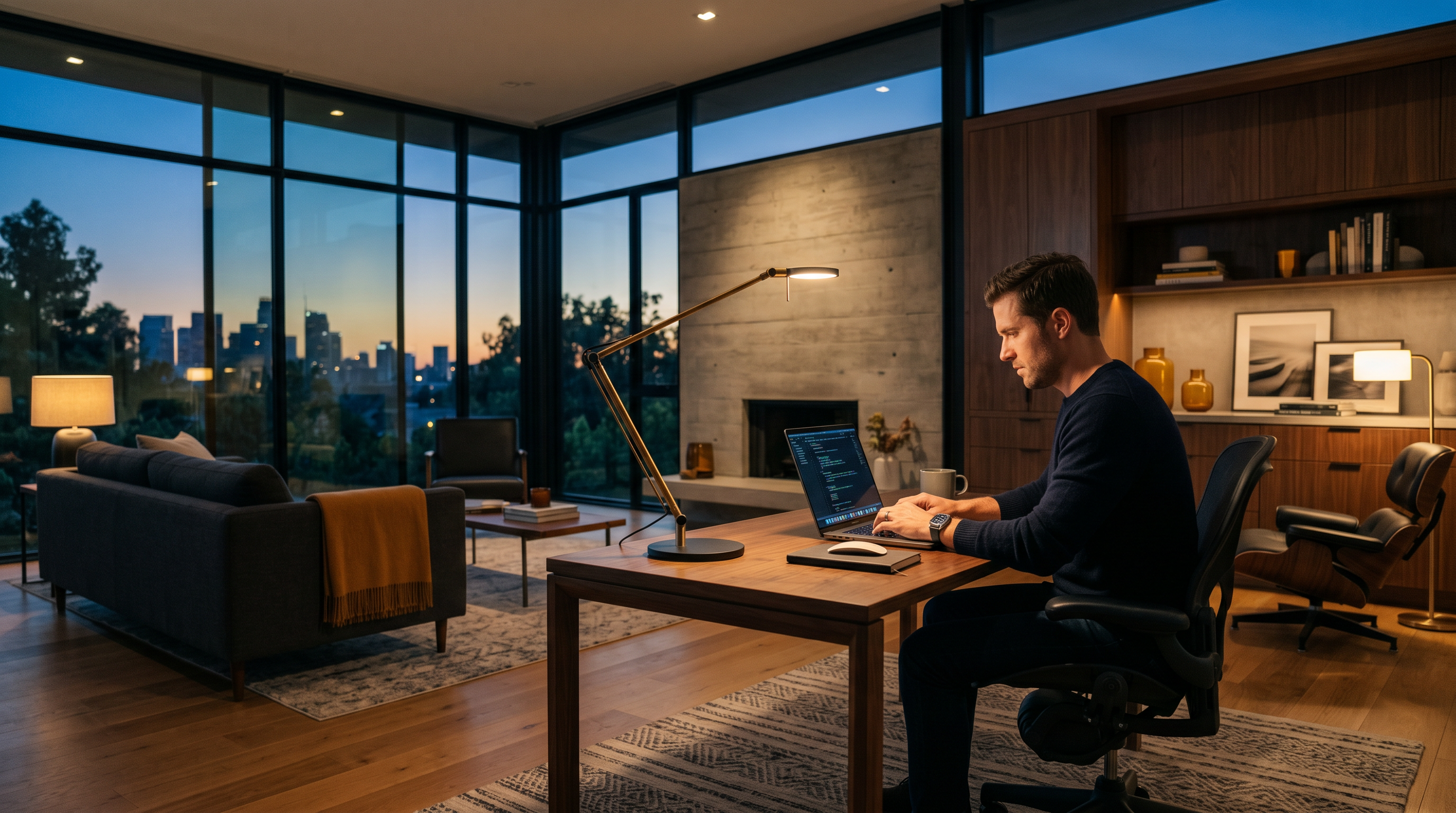
SEE THE DIFFERENCE
Same Room. Different Light.
TYPICAL LED LIGHT
Harsh • Artificial • Fatiguing
KIND LIGHTS
Natural • Balanced • Beautiful
Recover Deeper
Optimize Rhythm
Sharpen Focus
One bulb. Three settings. Light that fits the moment you're in.
Better Days. Better Nights.
THRIVE - 6000K
Your On Switch.
Full-spectrum, blue-rich light designed to support natural energy, focus, and mental clarity- helping you feel awake, alert, and ready whenever you need to show up.
FLOW - 3500K
Calm. Capable. Present.
The perfect balance between energy and relaxation. Warm enough to feel inviting, bright enough to stay productive. For work, evenings at home, and everything in between.
REST - 1800K
Your Body’s Off Switch.
A warm amber glow inspired by firelight, designed so melatonin rises naturally, helping your body unwind, your mind slow down, and wake up actually rested.
OUR PRODUCTS
Precision lighting for every environment you perform in.
Why Kind Light is Different
Most wellness bulbs optimize for bedtime. KIND supports your body’s rhythm from morning to night.
| Feature | Kind Lights | Other Wellness Bulbs |
|---|---|---|
| 6000K Morning Energy Mode | ✓ | ✗ |
| 3500K Balanced Daytime Mode | ✓ | ✗ |
| 1800K Deep Evening Mode | ✓ | Partial |
| One Bulb for Morning, Day & Night | ✓ | ✗ |
| Supports Natural Melatonin | ✓ | Partial |
| No App Required | ✓ | Partial |
| CRI 95+ True Color | ✓ | 80-85 |
| Flicker-Free Low EMF | ✓ | Partial |
| Luxury Design & Materials | ✓ | ✗ |
| 30-Night Risk-Free Trial | ✓ | Varies |
Our Technology
Your suprachiasmatic nucleus, the master clock in your brain, takes its primary cue from light wavelength and intensity. Standard LEDs deliver a narrow, blue-skewed spectrum that desynchronizes that clock, suppressing melatonin at night and underpowering alertness by day. Kind Lights engineers three targeted color temperatures, 6000K for daytime drive, 3500K for balance, and 1800K for nighttime melatonin support, with 95+ CRI and zero visible flicker. It's circadian biology, dialed in at the bulb.
Circadian Aligned
Your body runs on an internal 24-hour clock, your circadian rhythm, and it takes its cues from light. Bright, blue-rich light tells your brain it's daytime and time to be alert. Warm, low-blue light signals evening and helps your body release melatonin for sleep.
The trouble with ordinary LEDs is that they blast that same daytime signal at 10pm, so your clock never gets the message that the day is over. Kind Lights fixes this by shifting its spectrum across three modes: cool and energizing in the morning, balanced through the day, and warm and amber at night. The light follows the sun, so your body can finally keep time.
High CRI 95+
CRI, or Color Rendering Index, measures how accurately a light source shows the true color of everything it touches, on a scale up to 100 (natural daylight). Most household LEDs sit around 80-85, which is why food can look dull, skin looks washed out, and your home feels slightly "off" under them without you knowing why.
Kind Lights is rated 95+, close to natural daylight. Reds are richer, whites are cleaner, skin tones look healthy, and every room simply looks the way it's supposed to. Once you've seen your home under true color, the difference is hard to unsee.
Flicker-Free & Low EMF
Most LEDs flicker hundreds of times a second. You can't consciously see it, but your eyes and brain still register it, and for many people it shows up as eye strain, headaches, and that subtle fatigue you can't quite explain by the end of the day. On top of that, cheap electronics can emit unnecessary electromagnetic field (EMF) noise.
Kind Lights is engineered to be flicker-free and low-EMF from the driver up, so the light stays steady and quiet. No flicker to wear you down, no buzz in the background, just clean, comfortable light you can sit under for hours.
BACKED BY THOUSANDS OF OPTIMIZERS
"My sleep tracker doesn't lie. Deep sleep up, latency down, the only variable I changed was the light."
— Jason, founder & biohacker
"I treat light as a primary input now. Switching to a real circadian spectrum was the highest-ROI change I've made all year."
— Elena, longevity coach
"Flicker-free and 95+ CRI in one bulb is exactly what I'd been building with three devices. Now it's just the lighting."
— Tom, quantified-self enthusiast
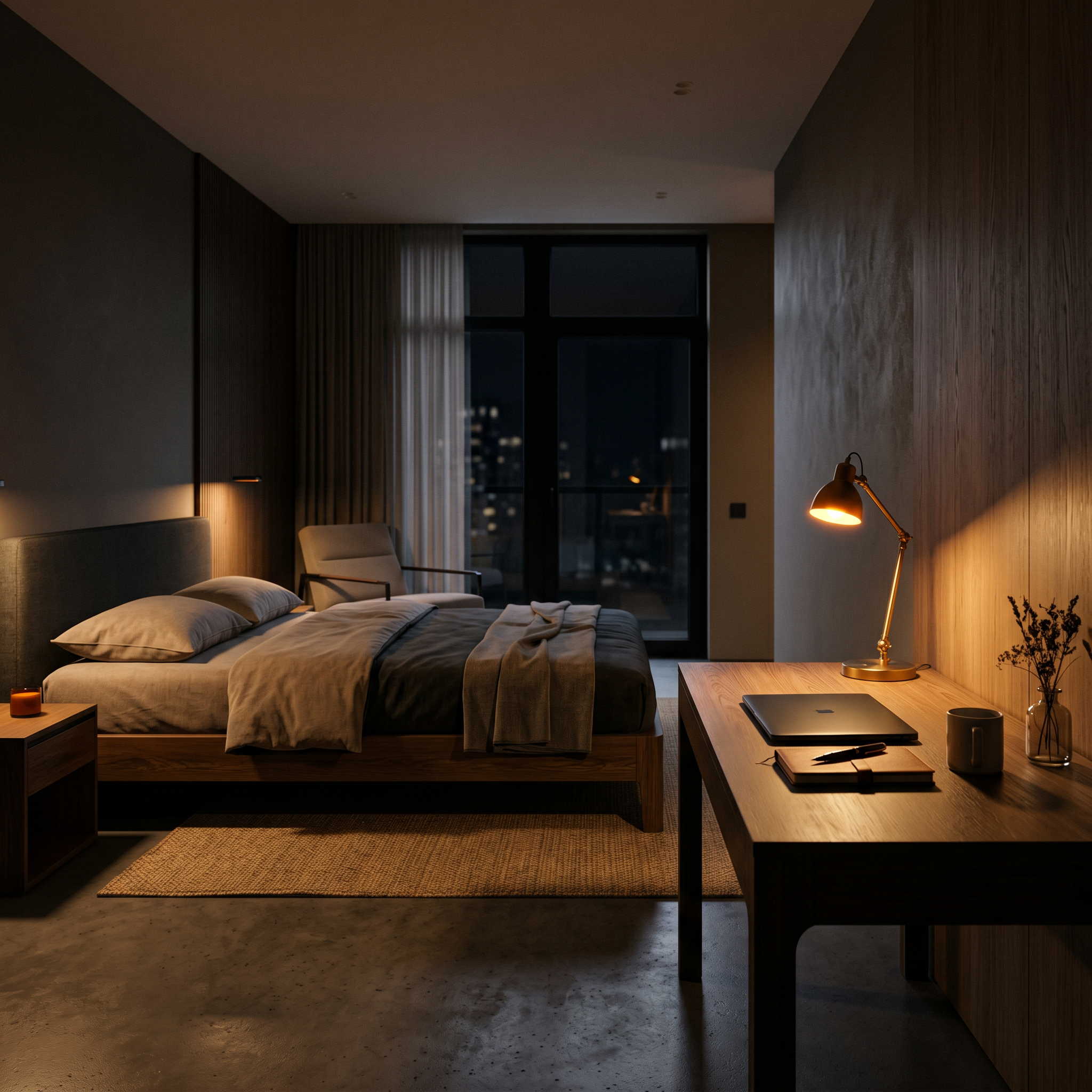
About Kind Lights
Kind Lights came out of a frustration any optimizer knows well: you can dial in sleep, training, and nutrition, then undo half of it with the light you sit under all day. Modern bulbs are built for cost and brightness, not for the human running beneath them.
So we engineered lighting around circadian science instead of around a spec sheet. Full-spectrum control, true color rendering, flicker-free output, the variables that actually move the needle. One bulb, three modes, built for people who measure everything and refuse to leave light to chance.