

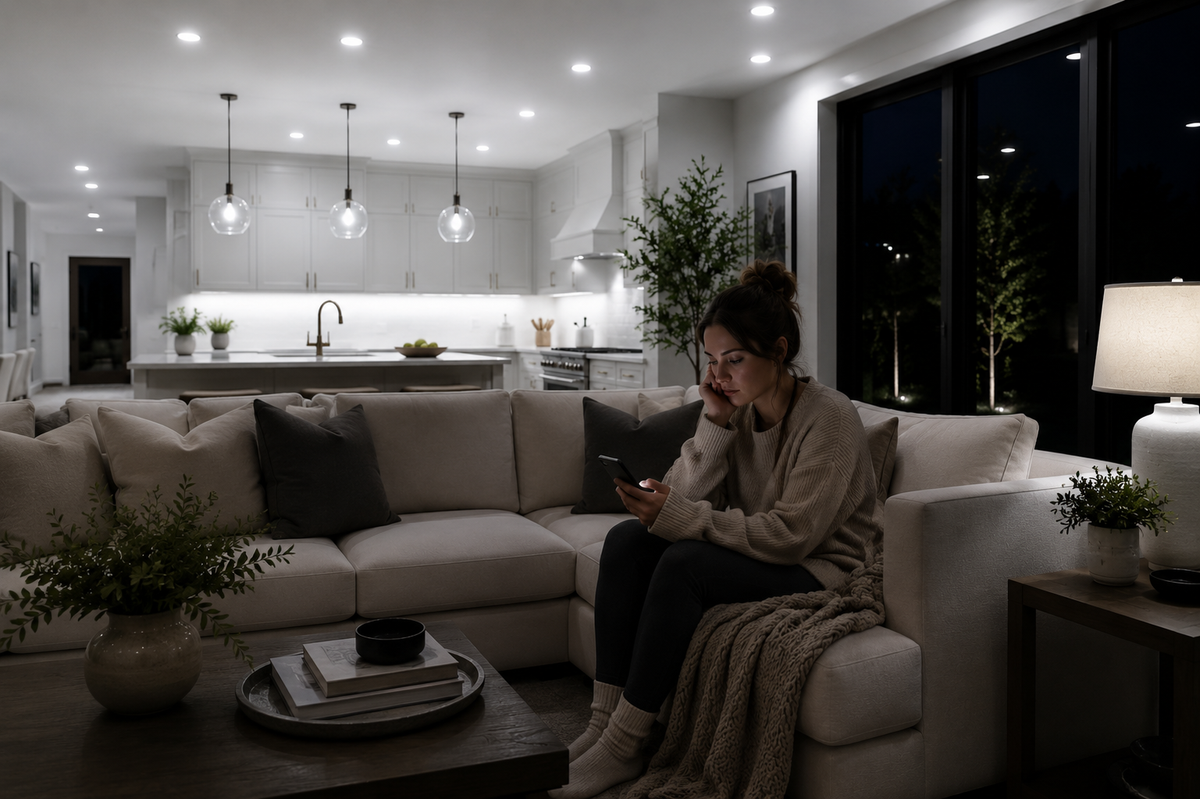
 Circadian lighting is often marketed as a sleep product, but the science behind it points to benefits that show up across the entire day, not just at bedtime. Light is the primary cue your body uses to time nearly everything: melatonin release, cortisol output, core alertness, even mood. Changing how and when you're exposed to different colors of light has downstream effects on sleep quality, morning energy, emotional stability, and how comfortable a room feels to simply be in. Here are 15 benefits the research actually supports.
1. Falls You Asleep Faster
Blue-wavelength light suppresses melatonin, the hormone that tells your body it's time to sleep. Removing that wavelength from evening lighting lets melatonin rise on its natural schedule, so your body gets a clear "it's night" signal instead of a delayed one.
2. Protects Deep Sleep
Blue-enriched light before bed has been shown to reduce the share of deep sleep you get overnight. Deep sleep is the stage most tied to physical recovery, so consistently protecting it matters more than it might seem small nightly losses compound into fatigue that's hard to trace back to a single cause.
3. No Behavior Change Required
Instead of relying on blue-light glasses or remembering to dim your phone, a circadian bulb removes most blue content from evening light automatically. The environment does the work, not your willpower.
4. Sharper Morning Wake-Up
Your body's cortisol awakening response to the natural spike that drives alertness after waking is influenced by light exposure. Bright, cool-toned light (roughly 5000K–6500K) in that first hour reinforces the spike instead of leaving your brain in a dim, low-signal environment during the exact window it's primed to respond.
5. Fights Winter Grogginess
Homes with limited natural morning light, especially in winter, often leave this half of the cycle unaddressed. A strong artificial dose of morning light compensates for what daylight isn't providing.
6. Covers the Whole Cycle, Not Half of It
Most wellness lighting products focus almost entirely on reducing blue light at night and ignore mornings entirely. That solves only half the problem: you may fall asleep better but still wake up groggy. True circadian lighting addresses both ends of the 24-hour cycle.
7. Steadier Mood Across the Day
Research on light timing and mood circuits shows that when you're exposed to light — not just how much it affects mood-related brain activity. Disrupted circadian rhythms have also been linked to broader mood disturbance.
8. More Even Energy, Fewer Afternoon Crashes
It's the contrast between bright, cool mornings and warm, dim nights, not the absence of blue light at any single moment that keeps your internal clock synced to the 24-hour day and supports steady energy throughout it.
9. Supports Whole-Body Clock Alignment
The suprachiasmatic nucleus (your brain's master clock) coordinates hormone timing, body temperature, and peripheral clocks throughout the body. Properly timed light exposure benefits far more than sleep alone; it's a whole-system signal.
10. Safe Middle-of-the-Night Light
A single minute under bright, cool-white bathroom light at 2 a.m. can suppress melatonin enough to make falling back asleep harder. A dim, warm night mode removes that risk for bathroom trips or feedings, without requiring any extra discipline in the moment.
11. Reduces Reliance on Willpower
Late-night light exposure is usually the result of forgetting to dim a phone, avoid a bright light, or adjust an app, not a lack of knowledge. When the default lighting in a space is already low in blue content, that risk disappears on its own.
12. One Less Thing to Think About
A system built into your existing wall switch means there's no app to open and no settings to adjust before bed. It just works the way a light switch always has.
13. Comfortable to Look At, Not Just "Correct"
Low-CRI (color rendering index) bulbs render skin tones and colors inaccurately, making a room feel flat even when the color temperature is technically right. A high CRI rating (95+) keeps colors looking natural throughout the day.
14. No Invisible Eye Strain
Cheap LED drivers often flicker at frequencies too fast to consciously notice but still detectable by your visual system, an effect linked in IEEE research to headaches, eye strain, and fatigue. A flicker-free driver removes that hidden cost of extended exposure.
15. Built for Daily Use, Not a One-Time Fix
None of these benefits are one-time effects; they come from consistent daily exposure patterns, just like your circadian rhythm itself is a repeating daily cycle. Systems that require manual daily adjustment tend to get abandoned within weeks; a bulb that shifts automatically from an existing wall switch gets used the way it's meant to be used, which is ultimately what makes these benefits materialize in practice.
 Circadian Lighting Benefits at a Glance
| Benefit | Driven by | Time of day it matters most |
|---|---|---|
| Faster, more consolidated sleep | Reduced blue light suppressing melatonin in the evening | 1–2 hours before bed |
| Natural morning alertness | Bright, cool light reinforcing the cortisol awakening response | First hour after waking |
| Steadier daytime energy and mood | Consistent day-night light contrast supporting entrainment | Throughout the day |
| Fewer disrupted evenings | Avoiding bright, cool-toned light late at night | 8 p.m.–bedtime |
| Visual comfort | High CRI and flicker-free drivers | All day, especially during close-up tasks |
For the science behind exactly how these effects happen at the cellular level, see how circadian lighting works. For the specific color temperature research behind the sleep benefit, see what color temperature is best for sleep. For the complete picture, including room-by-room setup, see the complete circadian lighting guide.
Share:
How Should I Use Circadian Lighting Throughout the Day?