

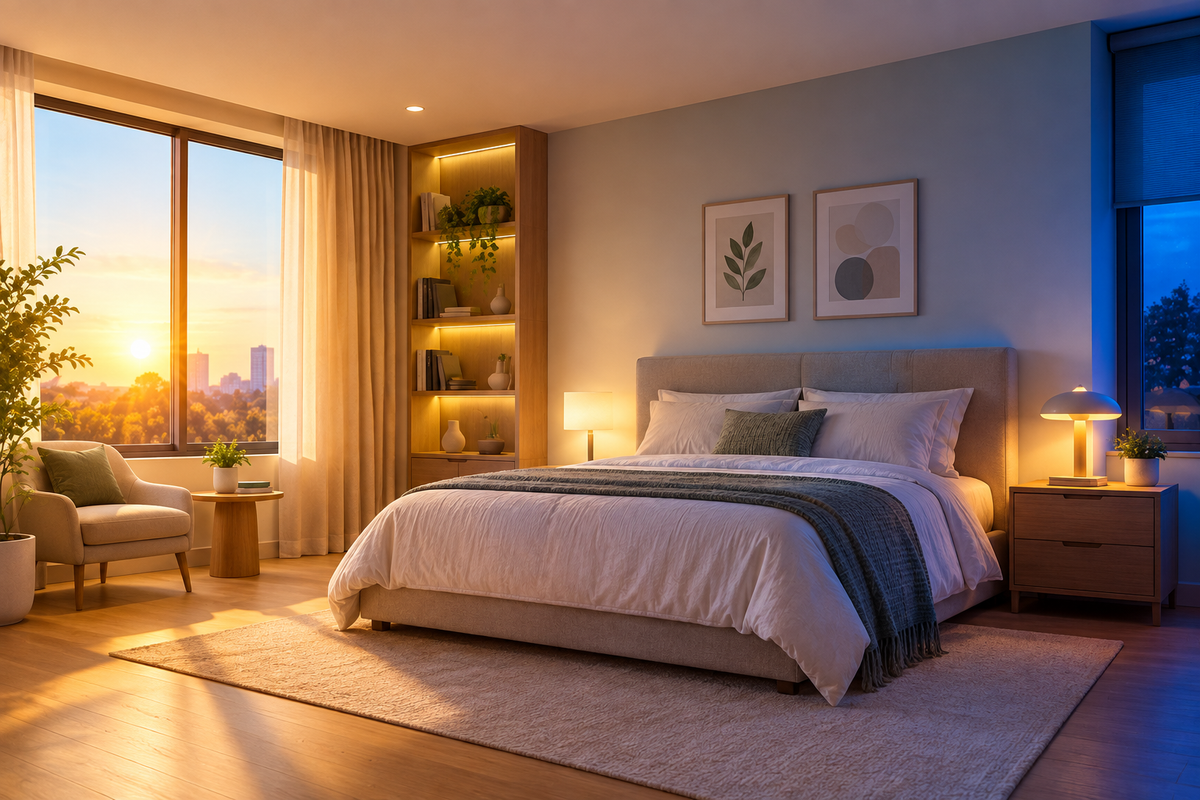
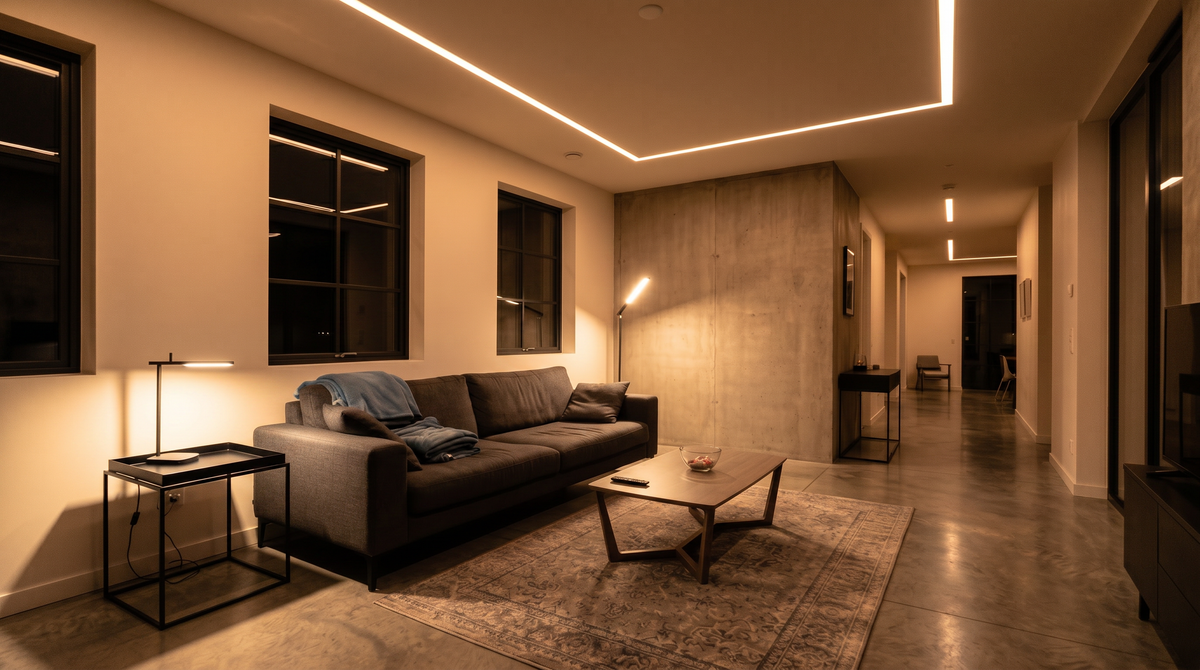
 The best color temperature for evening lighting is generally in the 1800K–2200K range — a warm, deep amber tone similar to firelight or candlelight.
Lower-color-temperature lighting contains less short-wavelength blue light than typical cool-white lighting, making it a popular choice for creating a calmer, lower-light environment in the hours before bed.
If you've ever wondered why a candlelit room feels different from a brightly lit office, you've experienced the difference between warm, low-level evening lighting and bright, cool-toned lighting. Your environment can provide different visual cues depending on the brightness and color of the light around you.
Why Does a Lower Number on the Bulb Matter for Sleep?
Color temperature, measured in Kelvin (K), describes how warm or cool a light appears. Higher numbers such as 5000K–6500K tend to look blue-white and resemble daylight, while lower temperatures such as 1800K–2700K appear warmer and more amber.
The body's circadian system is particularly responsive to short-wavelength light. Specialized cells in the retina called intrinsically photosensitive retinal ganglion cells (ipRGCs) help communicate information about light exposure to the brain's circadian system.
Research has found that blue-enriched light can have a stronger effect on melatonin suppression and circadian timing than comparable green light. This is one reason evening lighting strategies often focus on reducing bright, blue-enriched light as bedtime approaches.
For More Information, see Harvard Health's overview of blue light .
Isn't "Warm White" Already Good Enough?
Standard "warm white" LED bulbs are typically around 2700K–3000K. That's considerably warmer than daylight or cool-white lighting, but it still produces more short-wavelength light than very warm 1800K–2200K lighting.
If your goal is to create a lower-light evening environment, moving from cool white to 2700K can be a practical first step. Going warmer can further reduce the amount of short-wavelength light produced by the bulb.
Building standards also recognize that lighting's biological impact depends on more than visual brightness alone. Measures such as melanopic light are designed to account for how light affects the circadian system rather than simply measuring how bright a space appears.
How to Actually Use This Information
- Start your evening lighting earlier. Consider switching to warmer, lower-level lighting during the 1–2 hours before your target bedtime rather than waiting until you're ready to turn the lights off.
- Keep the light relatively dim. Color temperature is only one part of the equation. Brightness and the amount of light reaching your eyes also matter.
- Use warmer lighting for late-night trips. A dim amber night light can be a practical alternative to switching on a bright, cool-white bathroom or hallway light.
- Give your routine time to become consistent. Lighting is one part of your overall evening environment, so focus on creating a consistent routine rather than expecting an immediate change from a single night.
- Remember your screens. Phones, tablets, TVs, and computers can become significant light sources in the evening. Reducing screen brightness and limiting unnecessary screen exposure before bed can complement a warmer room environment.
- Consider the whole bedroom. If you share a room, try to keep the overall environment consistent. A single bright, cool-toned light can change the lighting environment for everyone in the room.
Kind Lights REST Mode
Kind Lights' REST mode is set to 1800K, providing a distinctly warm evening setting rather than simply shifting a standard daytime bulb slightly warmer. It is designed to fit naturally into an evening lighting routine using your existing wall switch.
Share:
Does Blue Light Affect Sleep? What the Science Says