

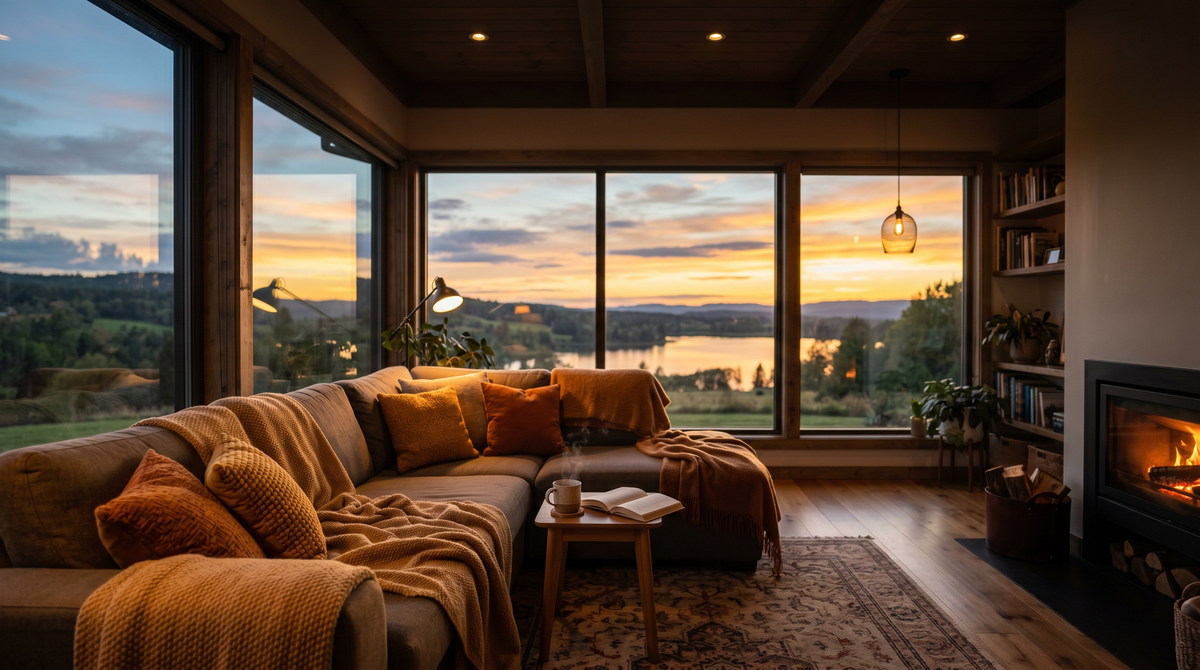

1800K is a deeper amber tone, similar to candlelight or firelight, with less blue-wavelength content than 2700K, which is standard "warm white" LED and incandescent-style lighting. Both look warm to the eye, but 1800K has a measurably weaker effect on the circadian system, making it a useful choice for pre-sleep and nighttime lighting.
If you've ever compared a plain "warm white" bulb to an actual candle or a fireplace, you've probably noticed they're both warm, but not quite the same warm. That small difference is exactly what this comparison is about — and it can matter more to your nighttime lighting routine than it seems from simply looking at the two side by side.
What Do 1800K and 2700K Actually Look Like Next to Each Other?
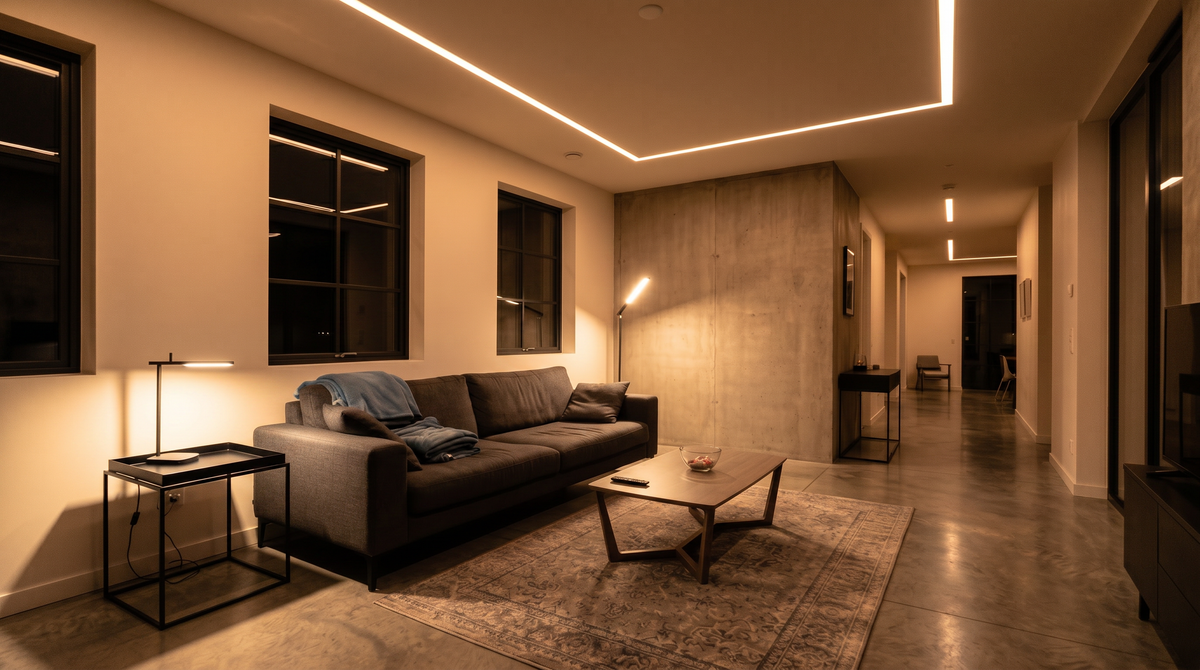
To the eye, the gap between 1800K and 2700K is noticeable but not dramatic. Both read as warm, cozy light rather than the brighter white associated with daylight-mimicking bulbs. 2700K is a common color temperature for soft-white incandescent-style LED bulbs used throughout the home.
1800K sits below that range, closer to the appearance of an open flame. It produces a deeper, richer amber tone, especially once a room is otherwise dark.
A simple way to picture the difference: if 2700K is what you'd get from a classic warm table lamp, 1800K is closer to candlelight on the same table. Put them side by side in a bright room and the difference may seem subtle. Once the rest of the lights are turned down, 1800K becomes noticeably deeper and more amber.
Why Does This Small Color Difference Matter to Your Body?
The more meaningful difference is in the light spectrum, not visual warmth alone. Your circadian system responds strongly to shorter-wavelength light, particularly around the blue portion of the visible spectrum, through specialized retinal cells that communicate with the brain's master clock.
Even though 2700K light looks warm, its spectrum can contain more short-wavelength energy than a very warm 1800K source. This is one reason warmer lighting is commonly used as part of an evening lighting routine.
This is also why your eyes aren't always a reliable way to judge the spectral characteristics of a bulb. Two bulbs can both look warm while producing different amounts of short-wavelength light. Looking beyond the visual appearance can therefore be useful when choosing lighting for different times of day.
So Which One Should You Actually Use?
| 1800K | 2700K | |
|---|---|---|
| Best for | Evening wind-down, bedrooms at night, nurseries | General ambient lighting, living spaces, early evening |
| Light character | Deep amber, firelight-like | Warm white, soft and familiar |
| Spectrum | Very warm with less short-wavelength content | Warm, but generally more short-wavelength content than 1800K |
| Nighttime use | Well suited to late-evening and nighttime lighting | Useful for general evening illumination |
In practice, 2700K works well for general-purpose evening lighting in living rooms, kitchens, and other spaces where you are still active. 1800K can be useful during the later part of the evening, particularly in bedrooms or other spaces where a very warm, low-blue-light environment is desired.
A simple way to choose
Think about what the room is being used for. A living room where you're still chatting, reading, or watching TV can benefit from the familiar warmth of 2700K. A bedroom or nursery used later at night may be better suited to the deeper amber appearance of 1800K.
These two color temperatures don't necessarily need to compete with each other. They can work together as part of an evening lighting routine. For example, you might use 2700K during the earlier part of the evening and move toward 1800K as bedtime gets closer.
This gradual transition can make your lighting feel more natural rather than changing the entire room immediately before bed.
This is why Kind Lights' REST mode is set to 1800K rather than the more common 2700K. It is designed specifically for a deeper, warmer nighttime lighting experience rather than serving simply as another warm-white setting.
For more information, see our guide on what color temperature is best for sleep or explore our complete circadian lighting guide to learn how different color temperatures can fit into a full-day lighting routine.
Share:
CRI and LED Flicker Explained: What You Need to Know