

Yes. Blue light suppresses melatonin production more strongly and for longer than other wavelengths of light at comparable brightness, which can delay sleep onset and shift your circadian rhythm later. This is one of the most consistently replicated findings in circadian lighting research.

What Studies Have Found
A widely cited Harvard study compared 6.5 hours of blue light exposure to 6.5 hours of green light exposure at matched brightness. The blue light suppressed melatonin for roughly twice as long as the green light and shifted circadian timing by about twice as much, roughly three hours of shift versus one and a half.
Even relatively dim light can matter: research summarized by Harvard notes that as little as eight lux — dimmer than most table lamps — can measurably interfere with melatonin secretion. That's a low bar. A nightlight, a phone screen on its lowest brightness setting, or ambient light leaking in from a hallway can all clear that threshold.
A separate 2021 study exposed participants to incandescent light, blue light, and blue light filtered through blue-light-blocking glasses before bed, and found that unfiltered blue light exposure reduced the proportion of deep sleep participants got that night. This suggests the effect isn't limited to how quickly you fall asleep; it can also change the architecture of the sleep you actually get.
Why Blue Light Has a Stronger Effect
Your eyes contain specialized cells called intrinsically photosensitive retinal ganglion cells (ipRGCs) that are separate from the rods and cones used for vision. These cells are most sensitive to light around 480 nanometers, the blue part of the spectrum and report ambient light levels directly to your brain's master clock, the suprachiasmatic nucleus.
Because blue light is the strongest trigger for this pathway, evening exposure to blue-enriched sources has an outsized effect on melatonin timing compared to warmer, longer-wavelength light. That includes:
- Cool-white LED bulbs, common in kitchens, bathrooms, and overhead fixtures
- Phone and computer screens, especially at default brightness and color settings
- Daylight-mimicking lights, including many "daylight" or "cool white" bulbs marketed for focus or energy

What You Can Do About It
- Evening and nighttime lighting should minimize blue-wavelength content, not just overall brightness. A dim cool-white light can still suppress melatonin more than a brighter warm-toned one.
- Screens are a major blue-light source in the hours before bed. Many experts recommend avoiding bright screens for two to three hours before sleep, or at minimum switching on night-shift/warm-color modes.
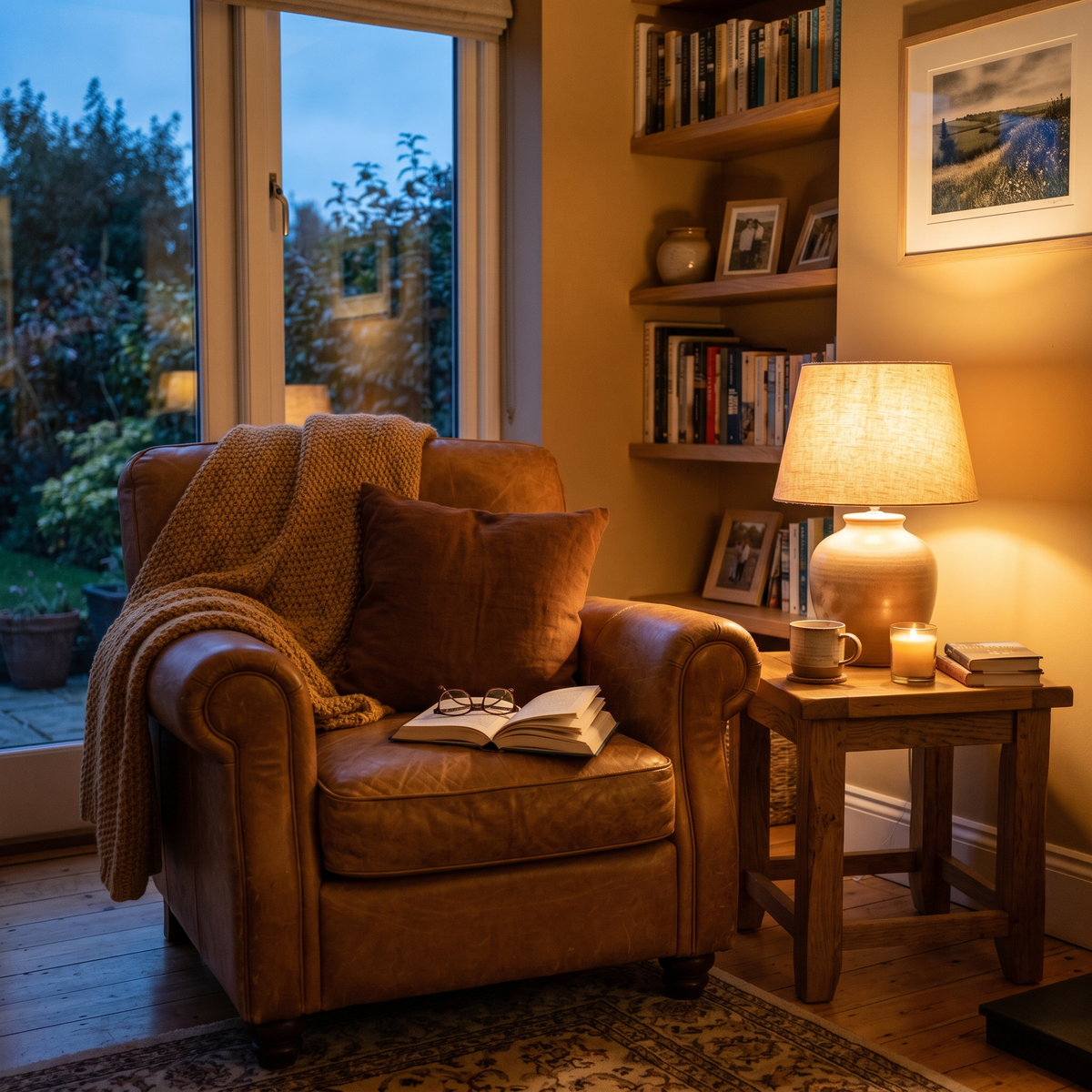
- Red and deep-amber light causes the least melatonin suppression. Light in the 1800K–2200K range, roughly 620–700nm-dominant, is generally considered the best option for evening and nighttime lighting, think candlelight or a salt-lamp-style glow rather than a standard bulb.
Why Timing Matters
None of this means blue light is inherently bad — during the day, it plays a useful role in keeping you alert and your circadian rhythm properly anchored. The issue is timing: the same wavelength that helps you feel awake at 9 a.m. works against you at 9 p.m.
For the specific color temperature range this points to, see what color temperature is best for sleep? For the full mechanism behind why ipRGCs respond to blue light the way they do, see how circadian lighting works.
Share:
How Circadian Lighting Works for Better Daily Rhythms
What Color Temperature Is Best for Sleep?