



Color temperature gets most of the attention in circadian lighting discussions, but two other specifications — CRI and flicker — can also affect how a bulb looks and feels in everyday use.
A bulb can have the color temperature you want and still produce less satisfying color rendering or unwanted flicker. In simple terms, color temperature helps describe the appearance of light, while CRI and flicker describe other important aspects of the lighting experience.
Think of it this way: color temperature is like choosing the right time to play a song — morning energy versus nighttime wind-down. CRI and flicker are more like the actual audio quality. You can choose the right moment and still have a less enjoyable experience if the underlying quality isn't there.
What Does "Color Accuracy" (CRI) Actually Mean?
CRI stands for Color Rendering Index, a 0–100 scale used to describe how accurately a light source reveals colors compared with a reference light source. Higher CRI generally means colors appear more naturally and accurately under the light.
A higher-CRI bulb can make a noticeable difference when you're looking at skin tones, wood finishes, paint, clothing, food, and other objects where accurate color matters.
Many standard LED bulbs are around 80–85 CRI. That's suitable for many everyday applications, while higher-CRI lighting is often chosen when more accurate color rendering is important.
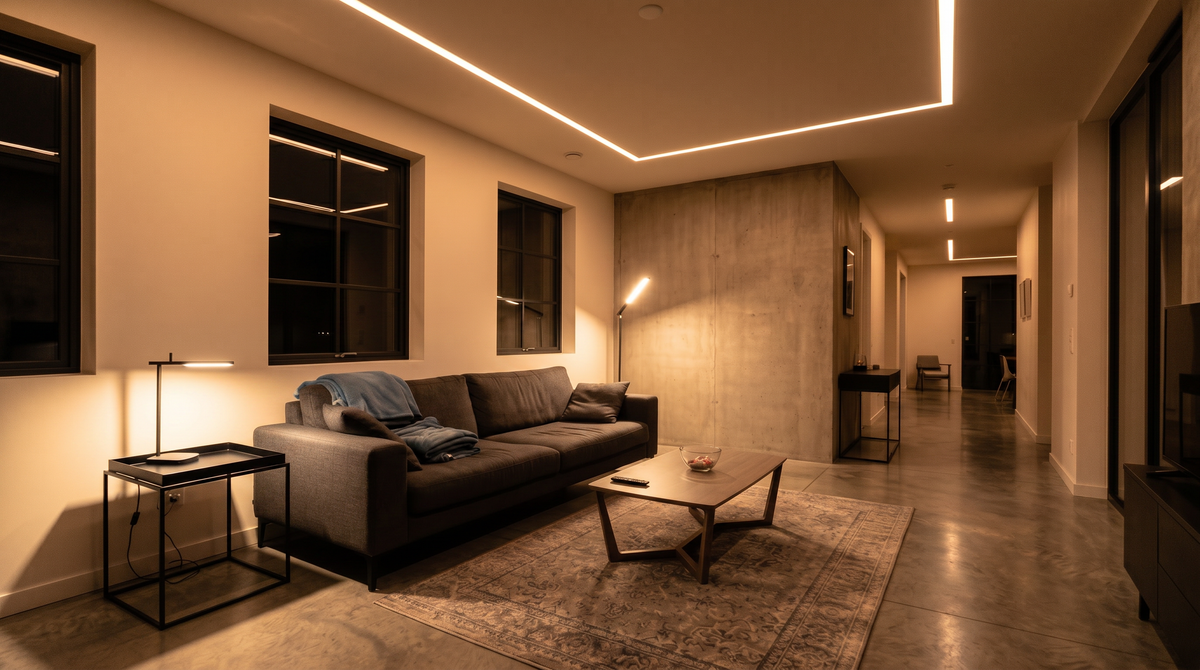
For example, a bulb with a warm 1800K color temperature can create a beautiful evening atmosphere, but its overall appearance will also depend on how accurately it renders the colors of the objects around you.
This is particularly relevant for circadian lighting because evening lighting is often intentionally warmer and dimmer. Good color rendering can help warm lighting feel rich and natural rather than simply dark or dull.
What Is LED Flicker, and Why Can't I See It?
Flicker refers to rapid changes in a light source's output. With LED lighting, flicker can be influenced by the design of the LED driver and the way electrical current is regulated.
Some flicker can be visible, while other forms occur at frequencies that most people cannot consciously see. This makes flicker difficult to judge simply by looking at a bulb.
Sensitivity also varies from person to person. Some people may notice discomfort, visual fatigue, or headaches under certain lighting conditions, while others may not notice any difference.
Research and lighting standards organizations have examined the potential effects of temporal light modulation, which is why flicker performance is worth considering when choosing lighting for spaces where people spend many hours.
Why CRI and Flicker Matter for Circadian Lighting
Circadian lighting is often discussed in terms of changing color temperature throughout the day. But the overall lighting experience involves more than Kelvin numbers.
A well-designed lighting setup should consider the color temperature, brightness, fixture, controls, and the characteristics of the bulb itself. CRI and flicker are two additional specifications worth checking when comparing different products.
For example, a warm 1800K–2200K setting may be appropriate for an evening lighting environment, while a higher-CRI bulb can help maintain more natural-looking colors within that warmer spectrum.
How to Check These Specs Before You Buy
CRI is usually easier to find than flicker performance. If you're comparing different bulbs, these simple checks can help:
1. Look for a stated CRI number.
Don't rely only on phrases such as "natural light" or "full spectrum." Check whether the manufacturer provides an actual CRI value.
2. Check for flicker information.
Look for clearly stated information about flicker performance, temporal light modulation, or the type of LED driver being used.
3. Test the bulb when possible.
A smartphone camera can sometimes reveal visible banding or rolling patterns caused by flicker. However, this is only a basic visual check and should not be treated as a professional flicker measurement.
4. Check dimmer compatibility.
If you use a dimmer, make sure both the bulb and dimmer are designed to work together. Compatibility issues can sometimes introduce unwanted flicker, particularly at lower brightness levels.
Kind Lights bulbs are designed with 95+ CRI and flicker free performance in mind, alongside the day-to-night color temperature changes that are central to the Kind Lights approach.
Getting the Kelvin range right is only one part of choosing a bulb. Looking at color rendering, flicker performance, brightness, controls, and fixture compatibility can help you make a more informed choice.
For the complete buying checklist, see how to choose the right circadian light bulb .
Quick Reference
| Spec | What to Look For | Why It Matters |
|---|---|---|
| CRI | 90+ is a useful benchmark; look for a stated number. | Helps colors appear more natural and accurate. |
| Flicker | Look for clear information about flicker or temporal light modulation. | Helps you compare lighting designed for comfortable extended use. |
| Dimmer Compatibility | Use bulbs and dimmers designed to work together. | Can help avoid compatibility-related flicker and performance issues. |
| Marketing Claims | Look for measurable specifications rather than vague terms. | Specific numbers make products easier to compare. |
Neither CRI nor flicker is represented by a bulb's Kelvin rating. That's why it's worth looking beyond the headline color-temperature number when comparing circadian and wellness lighting.

Share:
1800K vs 2700K: Which Light Is Right for You?