

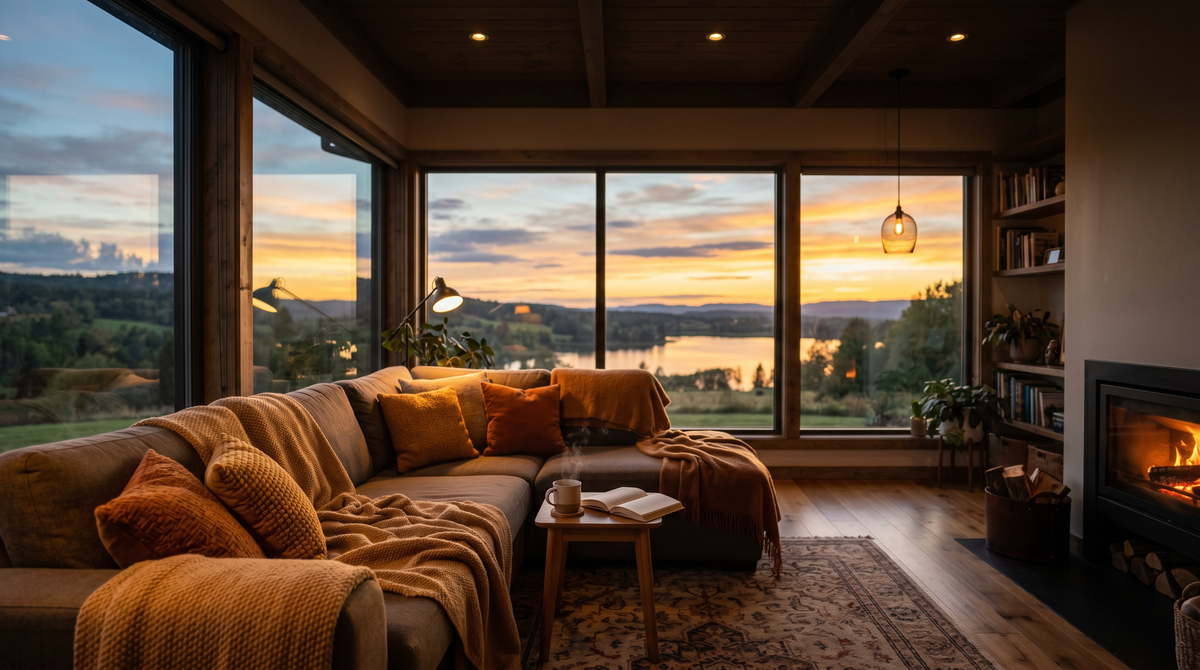
Color temperature is the number on a light bulb package that tells you whether the light will look amber, warm white or cool blue-white. It is measured in kelvins (K), and it shapes how a room feels, how well you can focus and, in the evening, how easily you wind down.
This guide explains what 1800K, 3300K and 6000K light look like, where each one belongs, and how color temperature relates to sleep, eyes, brightness and color quality.
What Is the Color Temperature in Lighting?

Color temperature describes how warm or cool a light appears, measured in kelvins (K). Lower numbers like 1800K look amber and candle-like, 2700K looks warm white, and 5000-6500K looks cool and bluish. Color temperature describes light color only, never how bright the light is.
The scale comes from physics. A heated object glows red, then orange, then white, then blue-white as its temperature rises, and kelvins measure that temperature. LED bulbs do not operate at those temperatures, so manufacturers use correlated color temperature (CCT), which states which heated-object color the LED's light most closely matches.
On US packaging, CCT appears as the "Light Appearance" scale on the Lighting Facts label, which runs from warm to cool with a kelvin figure. Remember two rules: a lower number means warmer, more amber light, and a higher number means cooler, bluer light.
| Color Temperature | Appearance | Real-World Reference | Typical Use |
|---|---|---|---|
| 1800K | Deep amber | Candle flame, firelight | Ambient glow, night lights |
| 2200K | Very warm | Dim-to-warm LED at low levels | Bedside lamps |
| 2700K | Warm white | Traditional incandescent bulb | Bedrooms, living rooms |
| 3000K | Soft white | Halogen bulb | Kitchens, bathrooms, hallways |
| 3300K | Neutral white | Between home and task lighting | Home offices, mixed-use rooms |
| 4000K | Cool white | Office and retail lighting | Task areas, garages |
| 5000K | Daylight | Midday sun | Detailed tasks |
| 6500K | Cool daylight | Overcast sky, standard daylight reference | Inspection, industrial work |
1800K, 3300K, and 6000K Compared
1800K is amber and the most sleep-friendly, 3300K is neutral white for mixed use, and 6000K is cool daylight for alert, detail-focused work. Each step up in kelvins adds more blue light and makes a room feel more energetic.
| Feature | 1800K | 3300K | 6000K |
|---|---|---|---|
| Appearance | Deep amber | Neutral/warm white | Cool blue-white |
| Looks Like | Candlelight | Bright, clean office | Midday sky |
| Best Rooms | Ambient corners, night lights | Kitchens, offices, bathrooms | Garages, workshops |
| Best Time of Day | Last hour before bed | Daytime and early evening | Daytime only |
| Blue Light Content | Lowest | Moderate | High |
| Sleep-Friendliness | Highest | Moderate | Low in the evening |
| Main Drawback | Too dim and orange for tasks | Compromise; not ideal for bedrooms | Harsh and stimulating at night |
What Is 1800K Light?
1800K light is a deep amber glow similar to a candle flame or firelight. It has very little blue light, so it is the most sleep-friendly white-ish light available. Use it in the last hour before bed, for ambient lighting and for night lights, but not for reading or tasks.
1800K creates atmosphere rather than visibility. At this color temperature, most colors look orange-shifted, and fine print is harder to read. Many 1800K products, such as filament-style flame bulbs, are also low in output, so they work best as a second layer of light, not the main source.
What Is 3300K Light?
3300K light is a balanced, neutral-white light that sits between warm home lighting and cooler daylight. It works well for kitchens, bathrooms, home offices and other spaces where you want clear, comfortable illumination.
3000K, often sold as "soft white," is a step warmer than 3300K and closer to halogen light. It suits kitchens and bathrooms where you want brighter, cleaner light but still a friendly tone. A comparison of 2700K, 3000K and 3300K is covered in more detail on our 2700K vs 3000K vs 3300K page.
What Is 6000K Light?
6000K light is cool daylight, a crisp blue-white similar to bright midday sky. It supports alertness and makes detail easy to see, so it suits garages, workshops, inspection tasks and daytime work areas. Avoid it in the evening and in bedrooms, because its high blue content can suppress melatonin.
Bulbs are commonly sold at 5000K and 6500K, which are standard nominal values in the ANSI lighting standard. A 6000K rating sits between them and is common on packaging. Treat it as cool daylight either way.
High-kelvin light is not automatically bad. Bright, cool light in the morning and daytime is useful for alertness. The problem is exposure late in the evening, when the body is preparing for sleep.
Which Is Brighter, Cool White or Daylight?

Neither is inherently brighter. Kelvin measures light color, not brightness, which is measured in lumens. An 800-lumen soft white bulb and an 800-lumen daylight bulb give off the same amount of light, although the daylight bulb may look crisper or brighter to the eye.
The US Department of Energy recommends shopping by lumens, not watts, when buying LED bulbs. The approximate equivalents are below.
| Old Incandescent Bulb | Approximate LED Brightness |
|---|---|
| 40W | 450 lumens |
| 60W | 800 lumens |
| 75W | 1,100 lumens |
| 100W | 1,600 lumens |
Lumens measure total light output from the bulb. Lux measures how much light lands on a surface, so it depends on distance and room size. Kelvin only describes color.
When to Use Warm vs. Cool Light?
Use 3300K for general daytime lighting and everyday tasks, and 6000K when you want cooler, more energizing light for focused daytime work. In the evening, switch to 1800K and dim the room to create a more relaxing environment.
| Time of Day | Suggested Color Temperature | Brightness |
|---|---|---|
| Morning | Daylight from windows, or 6000K | Bright |
| Midday | 3300K or 6000K for work areas | Bright |
| Late afternoon | 3300K | Medium |
| Evening | 1800K | Dim to medium |
| Last hour before bed | 1800K | Very dim |
| Night (if you must get up) | 1800K, dimmed | Minimal |
How Does Color Temperature Affect Sleep?
Cooler, blue-rich light at night suppresses melatonin and can delay sleep, while warmer light has a much smaller effect. Color temperature is only part of the picture: brightness, timing and how long you are exposed also matter. Keep the evening light warm, dim and low in the room.
The body clock is reset mainly by light. Light-sensitive cells in the eye send timing signals to the brain's master clock, and these cells respond most strongly to blue wavelengths around 460-480nm. That is why blue-rich light at night has the biggest effect on melatonin.
In a controlled study, room light before bedtime suppressed melatonin in nearly all participants and shortened its duration by about 90 minutes compared with dim light. In another study, people who read on a light-emitting tablet before bed took longer to fall asleep and were less alert the next morning than when reading a printed book.
Light also works in the other direction. In a study of people camping without electric light, exposure to the natural light-dark cycle shifted the timing of melatonin release earlier. In office workers, greater daytime light exposure through windows was associated with better reported sleep.
One caution: color temperature summarizes how light looks, not its exact spectrum. Two lights with the same kelvin rating can affect the body clock differently. Use color temperature as a practical guide, and control brightness and timing as well.
Practical rules:
- Get bright light early in the day, ideally from daylight.
- Switch to 1800K in the evening and dim the room.
- Use 1800K light in the last hour before bed and keep it dim.
- Keep screens dim and warm-toned, or put them away, near bedtime.
Is Daylight or Soft White Better for Eyes?
Neither is better for eye health. Daylight, at 5000-6500K, can feel crisper for detailed tasks, while soft white, at 2700-3000K, feels more comfortable in the evening. Glare, brightness level and flicker affect eye comfort more than color temperature. Choose by task and time of day.
The American Academy of Ophthalmology states that blue light from screens is not known to cause eye disease, and that eye strain comes mainly from prolonged screen use. To reduce eye strain, avoid glare on screens, take regular breaks and use flicker-free bulbs.
What Is CRI in Lighting?
CRI, or color rendering index, is a 0-100 score for how accurately a light shows colors compared with natural light. A CRI of 80 is acceptable for general use, and 90 or above is considered high quality. Higher CRI helps skin tones, food and artwork look natural.
CRI is separate from color temperature. Two bulbs can both be 2700K and have very different CRI scores, so a warm bulb is not automatically a good-looking one.
For kitchens, bathrooms with mirrors, art, retail displays and any task that involves judging color, look for CRI 90 or higher. Some manufacturers also publish TM-30 data, a newer method from the Illuminating Engineering Society that describes color fidelity and saturation in more detail.
What Is the Best Lighting for a Home Office?
The best home office lighting is bright, glare-free and appropriate for the time of day. KIND Lights' 3300K option works well for general office lighting, while 6000K can provide cooler, more energizing light for focused daytime work.
- Daytime: 3300K for comfortable general work or 6000K for more focused daytime tasks.
- Desk lamp: Adjustable, placed to the side of the screen, not behind or in front of it.
- Evening work: Shift to 3000K or lower and dim the room to protect your wind-down.
- Glare: Use matte screens or diffused fixtures, and avoid bare bulbs in your field of view.
- Video calls: 3300K with CRI of 90 or more and light in front of your face, not behind you.
Best Color Temperature for Every Room

| Room | Recommended KIND Temperature | Notes |
|---|---|---|
| Bedroom | 1800K | Best for evening relaxation and winding down |
| Living room | 1800K or 3300K | 1800K for evening; 3300K for daytime/general use |
| Dining area | 1800K or 3300K | Clear, comfortable light for cooking and preparation |
| Kitchen | 3300K | Better visibility for grooming and daily tasks; use 1800K at night |
| Bathroom | 3300K | See Nighttime Bathroom Lighting |
| Home office | 3300K or 6000K | 3300K for general work; 6000K for focused daytime tasks |
| Nursery | 1800K | Warm, dim light for nighttime |
| Hallway and stairs | 1800K or 3300K | 1800K at night; 3300K for daytime/general lighting |
| Garage and workshop | 6000K | Cool, bright light for detailed tasks |
| Outdoor | 1800K or 3300K | Choose based on atmosphere and time of use |
How to Read a Light Bulb Package
The US Lighting Facts label puts the key specifications on the box. Check these in order:
- Brightness (lumens): How much light the bulb produces.
- Light appearance (kelvins): The color temperature, from warm to cool.
- Energy used (watts): The power draw, which is much lower for LEDs.
- Life (hours or years): The expected lifespan.
- CRI: Often printed elsewhere on the package or on the product page. Look for 80 or higher, and 90 or higher for color-critical spaces.
Two more tips. First, use one color temperature in each room, or in any spaces you can see at the same time. Mixed values make a room look patchy. Second, if you want flexibility, consider tunable white bulbs, which can shift between warm and cool through an app or schedule.
Common Mistakes When Choosing Bulbs
- Choosing 6000K "daylight" bulbs for bedrooms because they look bright.
- Assuming a higher kelvin number means a brighter bulb.
- Mixing 2700K and 4000K bulbs in the same fixture or room.
- Ignoring CRI, so warm bulbs make food and skin look dull.
- Using bright light of any color late in the evening.
- Buying non-dimmable LEDs for a dimmer circuit.
Frequently Asked Questions
Is 6000K bad for sleep?
6000K is not harmful in the daytime, but it contains a lot of blue light, so it is a poor choice in the evening. Use 2700K or lower in the hours before bed.
What Kelvin Is Closest to Sunlight?
KIND Lights' 6000K option provides a cool, daylight-like appearance suitable for daytime use.
Which Color Temperature Is Best for the Evening?
1800K is the warmest option and is best suited to evening relaxation and nighttime lighting.
Can I Mix Different Color Temperatures in One Room?
You can, but it usually looks uneven. Keep fixtures in the same space at the same kelvin value, or use tunable white bulbs that change together.
What Color Temperature Is Best for Reading?
3000-4000K with high brightness and a CRI of 80 or higher works well. In the evening, choose the warmer end of that range.
Where to Go Next
Now that you understand color temperature, explore how different light settings can support your daily routine and sleep. Start with The Complete Guide to Light & Sleep, then compare 1800K, 3300K, and 6000K to find the right lighting for different times of day and spaces in your home.
Share:
The Complete Guide to Circadian Lighting