

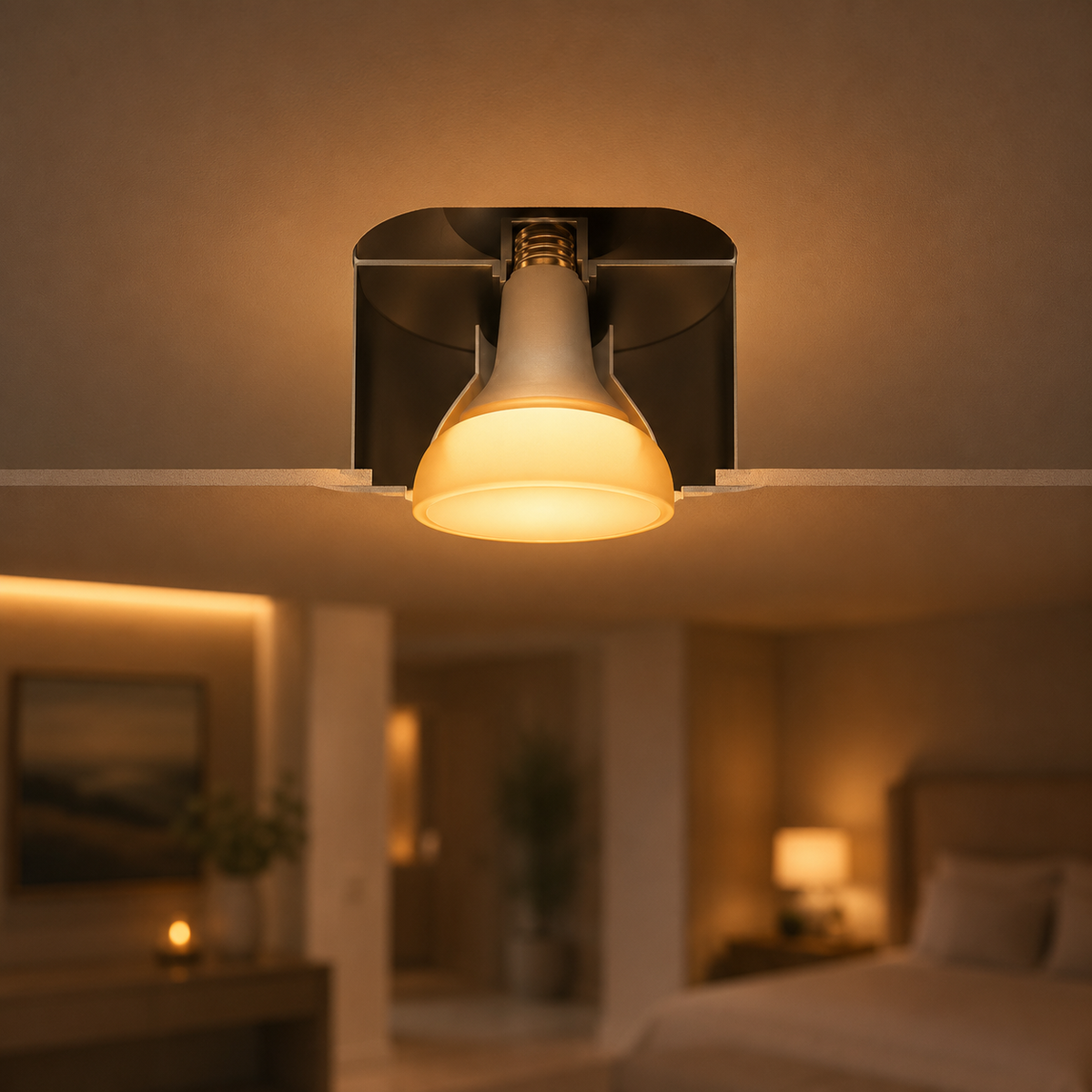
Dim, warm light in amber or red tones helps you sleep best. Choose 2700K or lower in the evening and 1800-2200K in the last hour before bed. These colors contain little blue light, so they are less likely to suppress melatonin than cool white or blue light.
Which light colors are best and worst for sleep?

| Light color | Typical value | Effect on melatonin | Best use |
|---|---|---|---|
| Dim red | Red LED | Lowest | Night lights |
| Dim amber | 1800-2200K | Very low | Last hour before bed |
| Warm white | 2700K | Low if dim | Evening rooms |
| Neutral white | 3500K | Moderate | Daytime |
| Cool white | 4000-5000K | High | Daytime tasks |
| Blue or cool daylight | 6000K and above | Highest | Avoid at night |
Why does light color affect sleep?
Light-sensitive cells in the eye send timing signals to the brain's master clock, and they respond most strongly to blue wavelengths around 460-480nm. When these cells detect blue-rich light in the evening, the body delays melatonin, the hormone that signals night.
Color is only part of the effect. In a controlled study, ordinary room light before bedtime suppressed melatonin in nearly all participants and shortened its duration by about 90 minutes compared with dim light. Choose a warm color and low brightness together.
What is the best sleep light?
The best sleep light is dimmable, warm, flicker-free and low in brightness, with an amber tone or a color of about 2200K or lower. Look for a timer or auto-off, and place it out of your direct line of sight. Brightness matters as much as color.
What color light should you avoid at night?
Avoid blue and cool white light at night, especially anything above 4000K. This includes most screens, daylight bulbs and bright LED overhead lights. Bright light of any color can delay sleep, so keep evening light dim as well as warm.
Reading on a light-emitting tablet before bed delayed sleep and reduced next-morning alertness compared with a printed book.
How to set up your evening lighting
- Early evening: Switch to dimmer, warmer light at 2700K or lower instead of bright, cool-white light.
- Last hour before bed: Switch to amber or 1800-2200K light and put screens away or turn them down.
- Night: Use a dim amber or red night light, placed low and out of direct view.
- Morning: Get bright daylight, which helps anchor your body clock.
Does light color matter while you sleep?
Darkness is best for sleep. If you need a light for safety or care, keep it amber or red, as dim as possible, and away from your eyes. Cover or remove bright standby lights and glowing screens in the bedroom.
Common mistakes
- Using a bright white bulb because it looks clean, then wondering why sleep is late.
- Changing the color but leaving the light at full brightness.
- Using a blue or cool white night light.
- Leaving a phone or tablet on in bed.
- Assuming any warm bulb is dim enough. Check that your lamp dims low.
Frequently asked questions
What is the best light color for sleep?
Amber and red are the best light colors for sleep because they have the least effect on melatonin. For general room lighting, choose warm white at 2700K or lower.
Does brightness matter as much as color?
That's right. Any color of bright light can keep you awake, so both you should dim the room and warm up the color.
Share:
CRI and LED Flicker Explained: What You Need to Know
Amber Light for Sleep: Does It Help You Sleep Better?